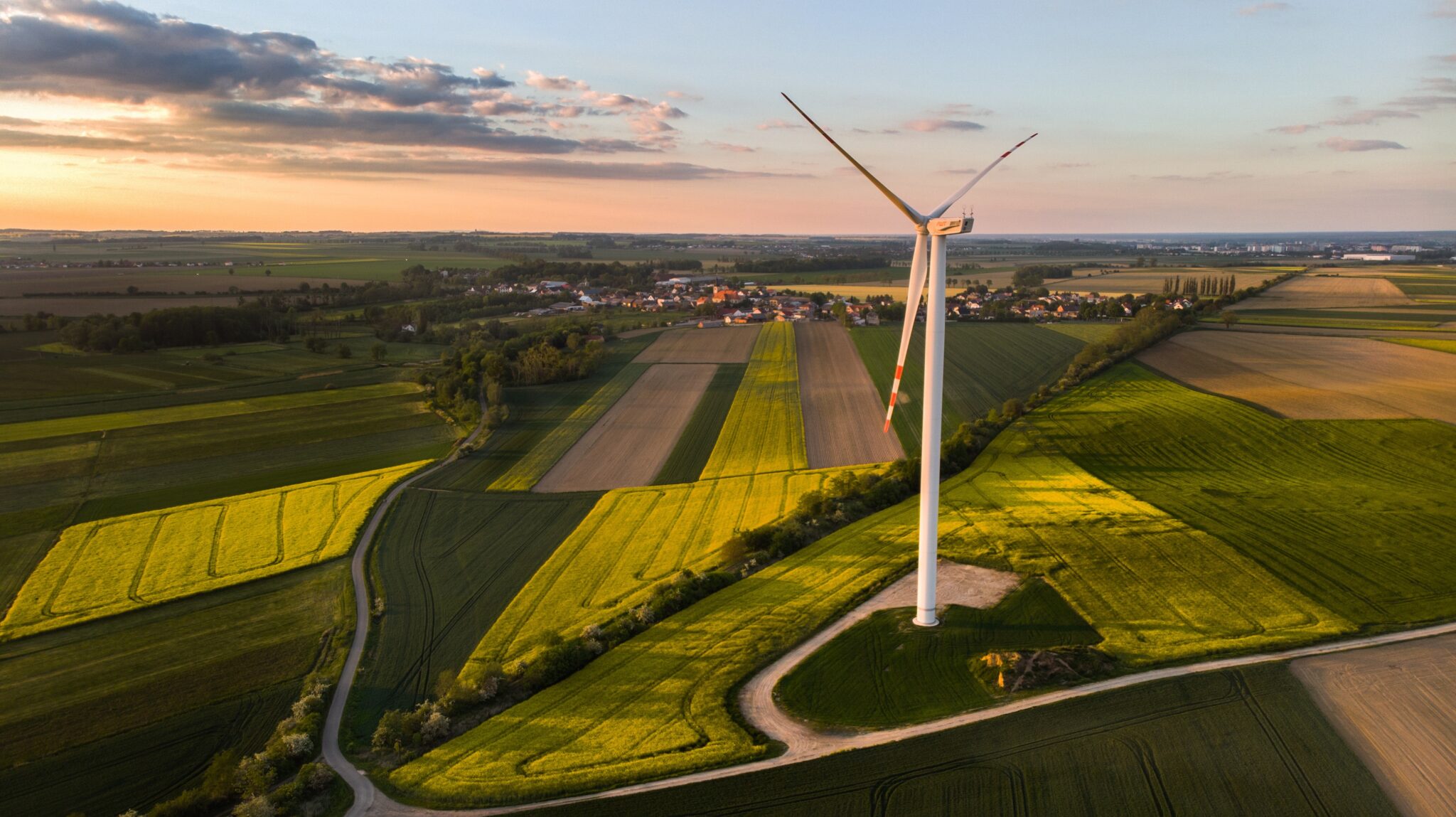
Electrum will deliver the full infrastructure for what will become one of the largest onshore wind farm in Poland. As part of the Wałcz project (124 MW), the company will be responsible for the entire Balance of Plant (BoP) scope — from foundations to grid connection — strengthening its position as a partner for the largest wind investments in the country, following the successful delivery of key infrastructure works at the Potęgowo Wind Farm.
Electrum, a leading Polish integrator of large-scale and technically complex energy projects, has been selected by European developer and IPP RP Global — a company with more than 40 years of experience in implementing renewable energy projects — as the contractor for the key infrastructure scope of the Wałcz Wind Farm.
One of the largest wind farms in Poland
Once operational, the Wałcz project will join the group of the largest onshore wind farms in Poland. At Potęgowo — the largest of these installations — Electrum was responsible for key infrastructure works.
Electrum’s scope of works (BoP)
Electrum will be responsible for the full Balance of Plant scope, including:
construction of foundations for 21 turbines,
construction of internal and access roads,
installation of the medium-voltage electrical infrastructure,
construction of the Grid Connection Point (GPO) substation,
installation of approx. 35 km of high-voltage underground cable line
integration of the entire system and preparation for power evacuation.
Completion of works is planned for 2027.
Wałcz project – among the largest turbines in Poland
The investor has selected Nordex N149 turbines, each with a capacity of 5.9 MW and a hub height of 134 meters — among the most powerful onshore turbines installed on the Polish market. A total of 21 units will deliver nearly 124 MW of installed capacity.
Electrum – experience in Poland’s largest wind projects
The Wałcz project joins Electrum’s portfolio of the most advanced wind investments in Poland. The company has for years also been developing competencies in operational management of wind energy production, being responsible for servicing and integrating installations with a total capacity close to 2 GW.
– „The Wałcz project is another example of an investment where we can leverage Electrum’s full expertise in constructing large and technically demanding wind farms. We thank RP Global for their trust and for selecting Electrum as a partner for such a significant undertaking. This is an important signal for us, confirming that Electrum is today a partner capable of delivering projects of the greatest scale and complexity, while supporting the growth of renewable energy in Poland,”— says Tomasz Taff, Commercial Director and Board Member of at Electrum.
The perspective of cooperation is also emphasized by RP Global:
– “We are pleased to have selected Electrum — a partner with proven experience in Poland’s largest wind projects — to deliver the key infrastructure scope of the Wałcz Wind Farm. This is a strategically important investment for the further development of RP Global’s portfolio in Poland, and cooperation with Electrum guarantees a high level of quality and safety in execution.” — commented Wojciech Głoćko, Country Manager of RP Global Poland.
Electrum Group is a leading Polish Climate Tech company headquartered in Białystok, offering end‑to‑end solutions based on cutting‑edge technologies for the development, construction, and management of energy and information projects. The technological maturity of its experts enables the delivery of products and services that meet the evolving needs of industry and business in an advancing energy transition.
The Group has completed nearly 400 energy facility and installation projects, manages over 3 GW of capacity, and has produced more than 4 GW of energy from wind and photovoltaic farms, making it one of the leaders of the energy transition in the region.
Electrum creates and delivers solutions and projects based on the idea of an individualized energy mix, balancing business social and environmental responsibility with economic efficiency.
More about Electrum can be found on our social media channels on.LinkedIn, Facebooku i Instagramie.
***
Press Contact
Jan Roguz
Brand Business Partner
Electrum jroguz@electrum.pl
tel. +48 539 732 610
Progressive climate change represents one of the greatest challenges facing the modern world. Actions supporting the reduction of carbon dioxide and other greenhouse gas emissions into the atmosphere play a crucial role in preventing it. This particularly applies to the industrial sector, whose development model has largely been based on fossil fuels until now. Changes in this area, concerning the need to minimize emissions of pollutants into the atmosphere, are generally referred to as industrial decarbonization. What exactly does this process entail? You’ll find the answer to this question in today’s article.
Industrial Decarbonization – What Does It Mean and Why Is It Crucial?
Economic decarbonization is the systematic reduction of carbon dioxide (CO₂) and other harmful greenhouse gas emissions through the implementation of appropriate technological, energy-related, and organizational changes in enterprises. It does not solely involve replacing fossil fuels with renewable energy sources (RES), but also encompasses the modernization of production processes, implementation of closed-loop material flows, and the application of innovative solutions that minimize negative environmental impact without the need to sacrifice high efficiency.
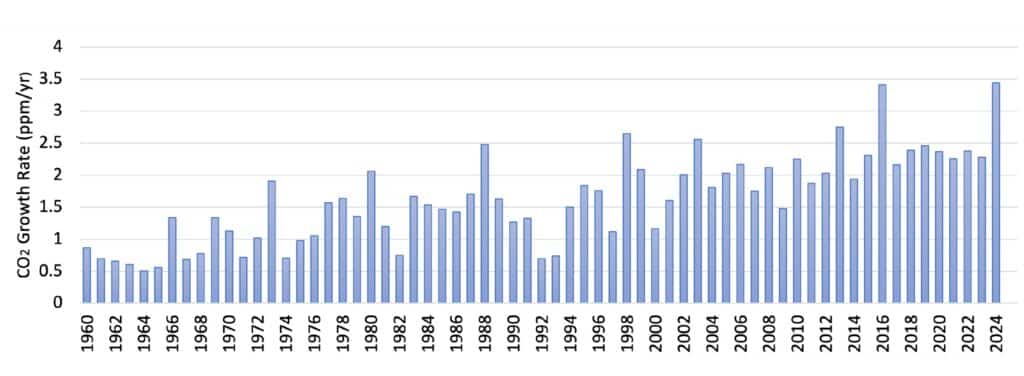
This is important primarily due to the need to protect the climate and the planet’s resources. As indicated by the World Meteorological Organization (WMO), carbon dioxide concentration in the atmosphere reached a record value in 2024 – 423.9 parts per million. An appropriate response from the industrial sector to this problem can translate into an effective fight against global warming.
Source: WMO Greenhouse GAS Bulletin No.21
What Are the Main Principles of Industrial Decarbonization?
This process is based on several priority actions, such as:
Increasing energy efficiency – reducing energy demand through the implementation of systems that optimize its consumption and modernization of production processes;
Limiting emissions resulting directly from technological processes – this involves the application of solutions such as green hydrogen;
Introducing a circular economy – this helps reduce the consumption of primary raw materials while minimizing the amount of waste generated.
Digitalization of industry – advanced automation solutions allow for precise monitoring of energy consumption and emission levels at every stage of production; they also enable process optimization and decision-making appropriate to specific needs.
All these actions are based on implementing solutions that do not negatively affect enterprise efficiency, thus not halting industrial development.
What Results Does Industrial Decarbonization Bring?
Industrial decarbonization translates into numerous benefits for both the natural environment and enterprises that decide to operate in accordance with its principles. Environmental benefits include:
Effective prevention of climate change through the reduction of greenhouse gas emissions.
Improvement of air quality, especially in heavily industrialized areas, which also translates into a healthier society;
Reduced utilization of natural resources thanks to recycling and the circular economy.
Protection of ecosystems by limiting environmental degradation resulting from resource exploitation;
Preservation of the planet’s potential for future generations.
Companies that contribute to industrial decarbonization can also count on a number of benefits. Above all, investing in solutions that improve energy efficiency allows them to reduce operational costs while improving business resilience to energy crises. It also influences the competitiveness of a given company – growing environmental awareness among consumers means that the market increasingly rewards climate-friendly products.
What Technological Innovations Support Emission Reduction in Industry?
As mentioned, modern technologies constitute an important element of the economic decarbonization process. In addition to RES installations such as wind and solar power plants, solutions worth highlighting include:
Green hydrogen – produced through water electrolysis using renewable sources- finds application in transportation, the chemical industry, and also serves as a stabilizer for energy grids.
Intelligent control systems – the use of the Internet of Things (IoT), data analysis, and automation to minimize energy and raw material losses and increase efficiency;
Energy storage – allows for efficient use of renewable energy, enabling industrial processes to operate even with variable RES production.
Circular economy and recycling – recovery of materials and their reintroduction into production.
Thanks to these solutions, the industry can not only limit its impact on the climate but also increase efficiency, save raw materials, and prepare for growing regulatory requirements and market expectations.
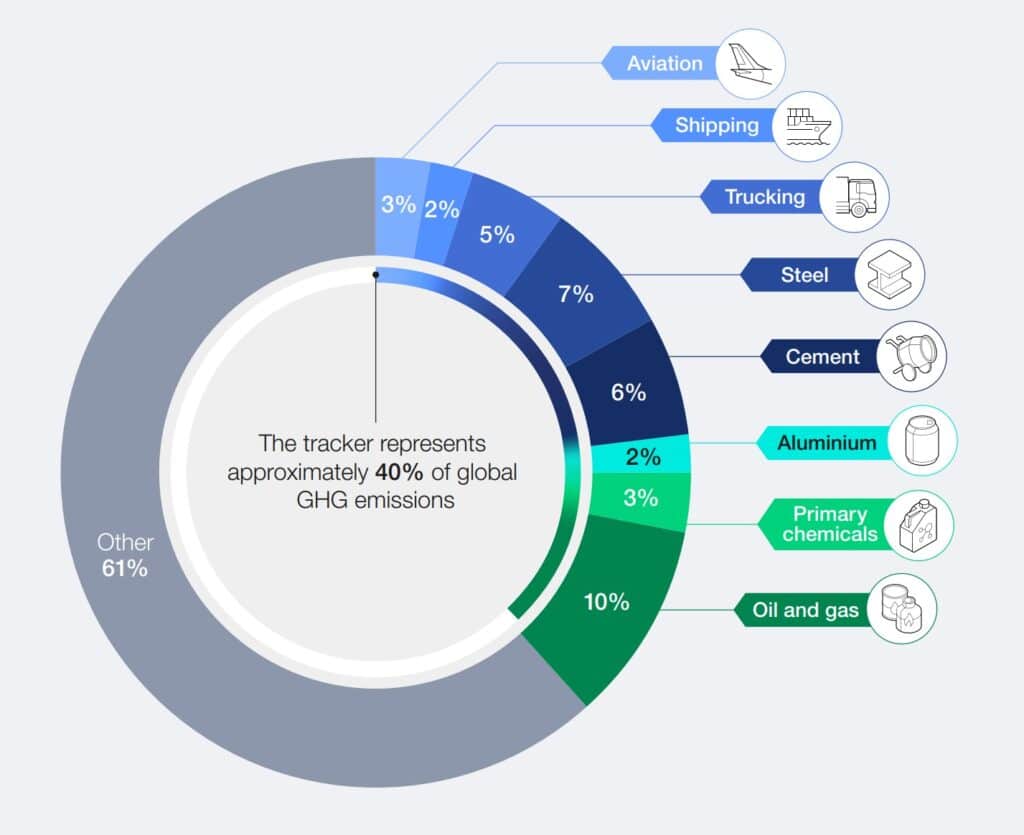
When discussing industrial decarbonization, particular attention is paid to sectors responsible for the largest greenhouse gas emissions into the atmosphere. This concerns, for example, metal production, which involves generating large amounts of CO₂. According to the Net-Zero Industry Tracker 2024 report, the most problematic areas in this regard are sectors such as steel, cement, aluminum, and chemical production, which together account for a significant portion of emissions.
Transportation also requires decarbonization – not only road transport but also industrial transport, covering the movement of raw materials and products in large quantities. Electrification of corporate transport fleets would allow for a reduction in air pollutants.
Source: World Economic Forum, Net-Zero Industry Tracker 2024
Industrial Decarbonization in Poland – What Challenges and Opportunities Do We Face?
Polish industry is highly energy-intensive and still largely relies on fossil fuels, which causes high CO₂ emissions. Steel, cement, chemical, and aluminum producers, as well as the petrochemical industry, are among the main greenhouse gas emitters in our country. The most important challenges in the process of industrial decarbonization in Poland include:
High transformation costs – modernization of industrial plants and introduction of new technologies require enormous financial outlays. In many cases, these costs are a barrier to the rapid implementation of low-emission solutions.
Dependence on coal and gas – Poland still largely uses hard coal and lignite in energy production and industry.
The need to adapt industry to European Union (EU) requirements – this involves the necessity of reporting emissions and implementing reduction plans. Failure to adapt may result in additional costs and loss of competitiveness in the European market.
Industrial decarbonization requires new competencies – specialists in RES, hydrogen technologies, energy efficiency, or process digitalization.
However, this is not a hopeless situation – Poland has the opportunity to significantly reduce industrial emissions through investments in modern technologies in heavy sectors such as steel, cement, or chemical production. The development of renewable energy sources and green hydrogen allows for independence from fossil fuels, while digitalization and automation of production processes increase energy efficiency and reduce raw material consumption. Access to EU funds, meanwhile, helps to implement this process more quickly.
How Does Electrum Support Industrial Decarbonization?
At Electrum, we actively work toward energy transformation in Poland, implementing large-scale RES projects for years. We work comprehensively, providing both investment planning and general contracting, as well as long-term management of installations.
We implement photovoltaic and wind projects, as well as hybrid power plants combining various energy sources. Additionally, we use advanced monitoring and energy asset management systems, which improve installation efficiency, reduce energy losses, and increase the profitability of implemented technologies. We are also involved in the development of hydrogen projects – thus effectively supporting industrial decarbonization in Poland and foreign markets.
We believe that intensive actions toward energy transformation will allow us and future generations to live in a world where zero emissions become the standard.
Hydrogen has been called the fuel of the future for many decades, though in reality, this term has only gained real meaning in recent years. The development of zero-emission hydrogen technologies is driven primarily by the rapid decline in energy prices from renewable sources, technological progress, and the urgent need to drastically reduce greenhouse gas emissions.
Green Hydrogen in a Nutshell
Green hydrogen is an essential element of energy transformation and a pillar of implementing the European Green Deal. The hope placed in it is considerable, as green hydrogen is expected to play an important role in the process of industrial decarbonization.
The element produced in a zero-emission manner is perceived as the only option for decarbonizing all those areas that cannot be electrified. This particularly applies to high-emission industrial processes (e.g., steel production, chemicals) and heavy long-distance transport, which we discuss in more detail in this text.
How is green hydrogen produced? In short, green hydrogen is produced through water electrolysis using electricity from renewable energy sources (RES). This sustainable hydrogen production is characterized by the absence of CO₂ emissions associated with both its production and use. Thus, it is the cleanest renewable hydrogen.
The advanced technological level and progressive commercialization of the electrolysis process are driving hydrogen’s role in energy transformation.
Currently, the process of obtaining hydrogen through electrolysis with RES participation is at a high level of technological maturity. Electrolysis methods such as ALK (alkaline) and PEM (polymer membrane) are fully commercialized, and the costs of this process are systematically decreasing—according to the International Energy Agency, they have fallen by over 60% since 2010.
The development of commercial H₂ production technologies from RES is currently transitioning from the research and pilot phase to the implementation phase. As a result, green hydrogen can be used in an integrated energy system as a raw material, fuel, carrier, or energy storage.
Therefore, in this text, we will discuss key threads related to sustainable hydrogen production and the use of green hydrogen.
Quick Facts
Poland is currently the third-largest hydrogen producer in the European Union, producing approximately 1 million tons of H₂ annually.
Most of this is gray hydrogen. Gray hydrogen is produced through steam methane reforming (SMR), a highly emission-intensive process. This hydrogen is usually produced and consumed on-site in large industrial facilities.
According to the International Energy Agency (IEA), in 2024, global hydrogen demand was close to 100 million tons. Its use is concentrated in the refinery, heavy, and chemical industries.
Green hydrogen is produced in an environmentally friendly manner, without carbon dioxide emissions. This most often occurs through water electrolysis using energy from RES.
Green hydrogen can replace hydrogen produced from fossil fuels in industrial processes such as ammonia production or petroleum refining.
Green hydrogen can be used as a clean fuel in various sectors such as transport, industry, and energy, which helps in the transition to sustainable energy sources.
Green hydrogen as energy storage can be used to store excess energy from renewable sources, which helps stabilize energy grids.
In Poland, the development of green hydrogen faces various barriers related to, among other things, access to clean energy and the development of appropriate infrastructure.
Green Hydrogen – What Is It and Why Does It Matter?
Where Do Hydrogen Colors Come From?
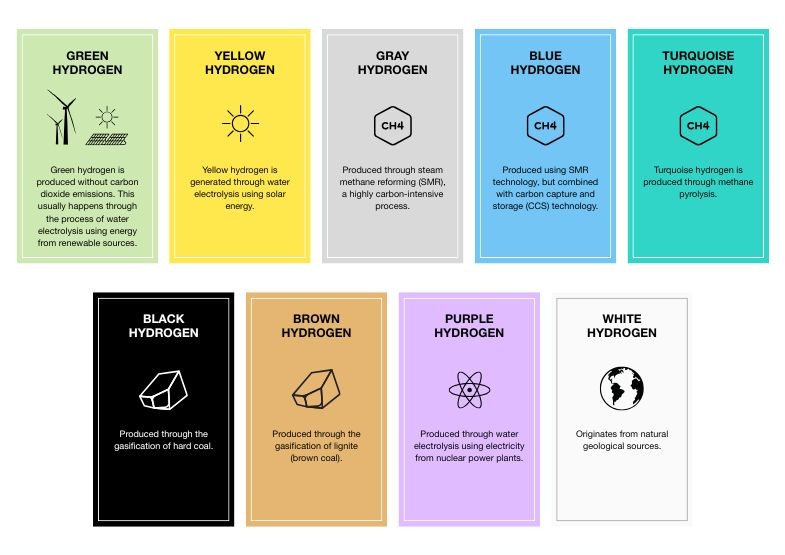
Hydrogen itself, as an element, is a colorless gas. Therefore, hydrogen colors are not the colors of the element itself, but conventional colors assigned to hydrogen extraction technology.
There are quite a few of these colors, as we distinguish gray, blue, green, yellow, turquoise, black, brown, pink (also known as purple), and white.
Fig. 1 Green Hydrogen Colors
As we mentioned in the quick facts, gray hydrogen production occurs through steam methane reforming (SMR), the main component of natural gas, at a temperature of about 1000°C.
This is the most common method of obtaining hydrogen. Unfortunately, the emissions associated with it average 9-10 kg of CO₂ released into the atmosphere for every 1 kg of hydrogen produced, as reported by the IEA.
Blue hydrogen is also obtained through SMR technology, but carbon capture and storage (CCS) technology is simultaneously used, which reduces emissions. CO₂ is stored, for example, in underground reservoirs. However, these are issues that still require research, analysis, and development of the entire market. Moreover, this does not change the fact that produced CO₂ cannot be stored indefinitely.
Therefore, transformation begins right here: in the process of replacing gray hydrogen with green hydrogen, produced mainly through the electrolysis process powered by energy from RES, making it a zero-emission method on the process side. CO₂ is not produced at all.
Green Hydrogen – How Is It Produced?
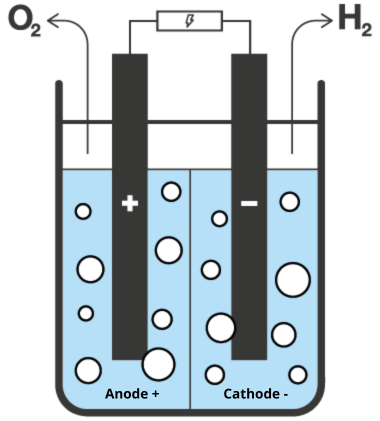
The most promising method of green hydrogen production remains electrolysis – the process of decomposing water into hydrogen (H₂) and oxygen (O₂) using electrical energy. It is carried out in devices called electrolyzers. The longest-used and still most common technology is alkaline electrolyzers (ALK).
Fig. 2 Water Electrolysis
This solution is technologically mature and increasingly widely implemented. It is distinguished by high efficiency and long component lifespan (amounting to 50–90 thousand hours). In large installations, these benefits are even more noticeable, and investment profitability is additionally strengthened by the competitive cost of the devices themselves.
💡 For us to talk about green hydrogen, it is essential that the electricity used in the electrolysis process comes from renewable energy sources.
In addition to alkaline electrolyzers, there are PEM, solid oxide (SOEC), and AEM electrolyzers – the choice of technology depends on the work profile, purity requirements, and integration with RES.
According to the World Energy Investment 2025 report by the International Energy Agency (publication: June 2025), global investments in electrolyzers increased by 90% in 2024 compared to 2023, and in 2025, they are expected to jump by as much as 150% compared to 2024, reaching a value of 2.5 billion USD.
Falling technology costs, political support, and growing private sector interest mean that the moment of commercial profitability for this technology – the tipping point – is getting closer.
What Are Alternative Methods of Green Hydrogen Production?
Water photolysis, also known as “artificial photosynthesis,” is a method using solar energy for the direct decomposition of H₂O (water) molecules into hydrogen and oxygen. This is a method remaining in the research sphere, still uncommercialized.
Thermochemical decomposition (splitting) of water – this process, requiring very high heat (from 500°C to 2000°C) and several chemical reactions, operates in a closed loop. This means that the chemical compounds used in it are constantly regenerated and reused. The only thing consumed is water, and the end products are hydrogen and oxygen.
Biological methods of hydrogen production – in these processes, microalgae and cyanobacteria play a fundamental role. Biological methods of hydrogen production can occur through photogenic means (with light participation, e.g., biophotolysis or photofermentation) or in processes independent of light (such as dark fermentation or bioelectrolysis).
Green Hydrogen Production – The Role of Renewable Energy Sources (RES)
Although green hydrogen production is technologically established, its mass scaling is burdened with challenges directly related to renewable energy. The shortage of clean electrical energy is one of the significant barriers to developing broad clean hydrogen production.
Delegated acts to the Renewable Energy Directive (RED II, and subsequently RED III) establish detailed conditions under which electrolytic hydrogen (including its derivatives, RFNBOs – Renewable Fuels of Non-Biological Origin, renewable liquid and gaseous fuels of non-biological origin) can be considered renewable.
These requirements aim to ensure that the electrical energy used for hydrogen production is additional to existing RES capacities and does not reduce decarbonization of the electricity sector.
This can be achieved by connecting the electrolyzer directly to a dedicated RES facility, such as a solar farm or wind farm.
💡 Ambitions related to green hydrogen development are closely linked to national RES development plans. For example, Poland’s green hydrogen production potential is based on offshore wind energy (a promising energy source with an estimated potential of 33 GW), as onshore wind implementation continues to be delayed due to restrictive regulations.
Green Hydrogen as Energy Storage from RES. Power-To-Gas Technology
Hydrogen has long been perceived as one of the most promising solutions for storing energy in chemical form, with the possibility of converting it back into heat or electrical energy.
An important concept in this area is Power-to-Gas (P2G) technology. It involves converting excess electrical energy, for example from wind or solar farms, into gaseous energy carriers – primarily green hydrogen (using electrolysis), and then, in a further stage, also into synthetic methane.
Hydrogen produced in this way is characterized by high energy density and is suitable for long-term storage, allowing for its rapid use when needed.
Thanks to P2G technology, it is possible to utilize surplus energy from RES or nuclear power plants, as well as integrate the electrical system with the gas system, which contributes to optimizing and stabilizing the entire energy system.
In practice, when there is surplus green electrical energy in the grid that cannot be immediately consumed, it is directed to electrolyzers. The hydrogen produced thanks to this can be further stored and used where needed – as fuel or raw material – thus creating so-called long-term energy storage (seasonal storage). Sounds good, right?
In modern energy systems of the future, RES, green hydrogen, energy storage, and developed transmission infrastructure will create a coherent ecosystem in which hydrogen as an energy carrier will play an important role.
Increasing the share of RES in national energy mixes is at the forefront of the main goals of global energy transformation. However, a significant challenge in transitioning to renewable energy sources is the instability of these sources, hence the need to seek effective ways to store energy. Power-to-Gas technology has a chance to excel in this regard.
💡 Hydrogen acts as a bridge between variable RES production and processes that cannot be easily electrified: refineries, steel, glass, cement, and chemistry. When wind and sun produce more than the system can accept, electrolysis-based systems can “absorb” surpluses, converting them into fuel and energy storage – with the potential for long storage and logistics outside the grid. This doesn’t replace batteries or cables but adds another, industrial dimension of flexibility.
Green Hydrogen and Climate Goals
Europe’s ambitious goal is to decarbonize all economic sectors and achieve climate neutrality by 2050. And as we mentioned earlier, green hydrogen has the potential to directly replace fossil fuels in sectors difficult to electrify.
However, the current scale of green hydrogen production is still small relative to overall hydrogen needs. Global and European reports – such as the Global Hydrogen Review 2024 by the International Energy Agency – indicate that hydrogen is only beginning to play a real role beyond narrow industrial applications.
EU regulations (RED III) require that by 2030, 42% of hydrogen consumed in the EU industry comes from renewable sources. The EU REPowerEU plan aims to produce 10 million tons of renewable hydrogen in the EU and import 10 million tons of renewable hydrogen by 2030. Will these goals be achieved? For now, we cannot be certain of anything, but we still have 4 years to try.
Uncertainty is also related to the implementation of the Polish Hydrogen Strategy. The Polish Hydrogen Strategy established 6 specific goals and 40 tasks covering industry, energy, and transport. The Polish Hydrogen Strategy includes, among other things, the construction of not-yet-existing hydrogen power plants and heating plants, as well as goals for hydrogen vehicles. The goal is to achieve 2000 MW of installed capacity in low-emission hydrogen production facilities by 2030 and create five hydrogen valleys.
As we cited in one of our articles, at the global and national level, we must seek business niches where green hydrogen makes sense technically and economically. Such projects are already beginning to appear – and this direction is worth developing.
Applications of Green Hydrogen in the Economy
💡 At this stage, it is important to consider where and how to use the limited amount of available green hydrogen. In the coming years, this amount will certainly not be sufficient for all potential applications. Therefore, public funds and efforts should be directed primarily at decarbonizing those areas of the economy that cannot be electrified.
Many strategic documents (as we know from, among others, the report “The Race for Hydrogen. Countries and Their Hydrogen Strategies” by the Polish Economic Institute) treat the industrial sector as a priority because it is potentially the largest recipient of clean and low-emission hydrogen due to the lack of alternative decarbonization options in high-emission processes.
Heavy Industry and Metallurgy: Emission Reduction in Steel Production
Green hydrogen can help decarbonize heavy industry, especially in processes requiring high temperatures, such as steel and cement production. The process of enriching iron ores through hydrogen reduction represents a potential alternative to traditional methods, which can contribute to reducing CO₂ emissions by 70-90% compared to conventional steel production processes.
Achieving zero-emission steel production is key to Europe’s climate neutrality assumptions because, as shown in many sources, including the report “Steel Industry in Poland” by WiseEuropa, the steel industry itself accounts for approximately 2.5% of emissions in Poland, 5% of CO₂ emissions in the EU, and about 7-8% of emissions worldwide.
Refinery, Petrochemical, and Chemical Industries
Hydrogen production is needed to process crude oil into gasoline, diesel fuel, and other chemicals. It is in the refinery industry that a significant portion of gray hydrogen is produced and consumed. Therefore, this is one of the main sectors showing interest in green hydrogen.
In the petrochemical sector, semi-finished products from refineries (and natural gas) are processed into other chemicals such as ammonia, methanol, acetic acid, formaldehyde, or chloromethane.
Hydrogen in the chemical industry is used as a raw material for the production of many compounds, including the aforementioned ammonia and methanol, or hydrogen peroxide. Ammonia production already accounts for a significant portion of hydrogen demand in the EU, and new production capacities represent an opportunity to increase the scale of low-emission hydrogen production pathways.
💡 Currently, the refinery and chemical industries are the main recipients of hydrogen produced in Poland. As reported by the Polish Economic Institute, in 2022, oil refining and ammonia production accounted for over 96% of total H₂ demand in Poland, which amounted to over 784 thousand tons annually.
On a European Union scale, in 2019, hydrogen use in refining amounted to 3.7 million tons/year, accounting for 45% of total hydrogen demand. In this sector, as in other branches of industry, gray hydrogen obtained from fossil fuels (mainly natural gas) dominates.
In June 2025, we signed an agreement for the construction of a 5 MW electrolyzer for Gdańsk Refinery – a “turnkey” project that connects the world of renewable energy with refinery processes. This is the first such installation in northern Poland.
District Heating: Heating Buildings Without CO₂ Emissions
Hydrogen (alongside biomethane) is treated in EU regulations as the target, zero-emission fuel of the future for gas cogeneration. The heating sector is increasingly feeling pressure to modernize and use alternative solutions, including the development of hydrogen technologies.
💡 In Polish district heating, we see significant consumption of conventional fuels, especially hard coal, which in 2024 accounted for approximately 60% of total heat production in the country. The aforementioned Polish Hydrogen Strategy provides for the use of hydrogen in commercial and residential heating, as well as systemic heating.
What does this look like in 2025? Poland is in the pilot and construction phase of the first green hydrogen production hubs. The goal of some projects is to supply both industry and transport, as well as – in the longer term – provide fuel for municipal district heating.
In Elbląg, for example, a pioneering, world-first bidirectional installation based on solid oxide cells operates, producing green hydrogen. The system, integrated with the BB20 biomass block at the local combined heat and power plant, can also operate in the opposite direction – as a fuel cell, converting hydrogen back into electricity. This universal solution has dual application: it serves to produce green hydrogen (e.g., for transport) and functions as energy storage.
Hydrogen boilers in district heating are being tested in several countries. The operation of a hydrogen boiler is based on the innovative combustion of hydrogen in pure oxygen, not atmospheric air or a mixture with natural gas, which is groundbreaking on a European scale. Among others, SES Hydrogen Energy conducted functional tests of a 0.5 MW hydrogen-oxygen boiler. Its creators have begun certification work. The device is to be used for hydrogen heating of apartments in a housing estate in Śrem, Wielkopolska.
Hydrogen in Transport
Transport is an area of the economy that participates in the hydrogen revolution, standing at its very forefront, and the popularity of emission-free hydrogen-based transport solutions in Europe is steadily growing. Among Polish cities that have decided to purchase hydrogen buses are Poznań, Wrocław, Wałbrzych, Konin, and Rzeszów.
This is all because hydrogen shows higher potential in long-distance, freight, and bus transport than BEV (Battery Electric Vehicle) vehicles due to shorter refueling times and longer ranges.
As indicated by SES Hydrogen, the average range of hydrogen fuel cell buses (FCEV – Fuel Cell Electric Vehicle) can exceed 350-400 km on a full tank, which translates into increased vehicle efficiency and reduced refueling frequency. For comparison, the average range of a BEV bus is approximately 250 km. However, depending on the model and manufacturer, this value can be correspondingly higher.
Regarding the use of hydrogen in rail transport, Poland is becoming an arena for pioneering tests and investments. An example is the hydrogen locomotives developed by PESA, which are already undergoing trials in industrial conditions – among others, on KGHM sidings, where Pol-Miedź Trans tested the SM42-6Dn prototype and was very satisfied with the results regarding both traction power and fuel consumption.
Aviation, like heavy long-distance transport and shipping, is one of the segments of the transport system where it is difficult to achieve emission reduction using other methods, which is why hydrogen represents an attractive option. In the aviation sector, hydrogen application involves the production of liquid fuels based on hydrogen (synthetic hydrocarbons).
Hydrogen Fuel Cells
Hydrogen fuel cells are electrochemical devices – electrochemical energy converters – that convert hydrogen into electrical energy, performing a key function in energy storage systems.
In integrated Power-to-Gas-to-Power systems, hydrogen produced in the electrolyzer is stored and then – when needed – converted back into electricity in the fuel cell, with water and oxygen being the only by-products.
This technology finds application both in power supply security systems for buildings or industrial installations, and in transport, where the cost of cells and hydrogen tanks largely determines the competitiveness of hydrogen-powered vehicles.
For efficient cell operation, high fuel purity is very important – green hydrogen from electrolysis achieves a standard of 99.97%, allowing for its safe use in drive systems, while hydrogen from reforming requires costly purification.
As reported by the Polish Economic Institute, in Poland in 2022, 22.3 million PLN from public expenditure was allocated to research related to hydrogen technologies and fuel cells.
Green Hydrogen from RES in Poland – Challenges and Perspectives
Recent years have shown that difficult market conditions significantly slow down the development of green hydrogen-related projects. High investment costs, rising renewable energy prices, and regulatory uncertainty have caused some initiatives in the EU to be limited or completely halted. Many projects were closed primarily due to a lack of economic viability.
In Poland, a factor hindering the development of this market is the relatively high cost of producing electrolytic green hydrogen compared to other European Union countries, and the resulting narrow group of entities willing to pay for using green hydrogen in their operations.
Therefore, one of the better ideas seems to be producing green hydrogen for its own use, as the Gdańsk Refinery is doing.
Hydrogen transformation, although crucial for decarbonization, requires overcoming barriers related to the high cost of green hydrogen production (which is multiple times, at least twice as high as gray hydrogen), enormous energy losses in the value chain (low conversion efficiency), lack of developed transmission infrastructure (read more in another text of ours) and storage infrastructure, as well as the need for massive increase in RES capacity to power electrolyzers.
And just as these barriers exist, the future of green hydrogen in energy systems is perceived as an extremely important pillar for achieving full climate neutrality. Despite current challenges, there is growing conviction that with the decline in technology costs and RES development, green hydrogen will become one of the key elements of a competitive and emission-free economy.
Electrum – Support in Implementing Hydrogen Projects
With nearly 30 years of experience in the energy sector and strong engineering capabilities, at Electrum, we are capable of implementing the full spectrum of hydrogen projects – from analyses and concepts, through design and installation construction, to integration with energy management systems and operational support.
We combine practical knowledge of the market and EU regulations with the ability to optimize CAPEX and OPEX, thanks to which we can translate ambitious decarbonization plans into real, effective installations.
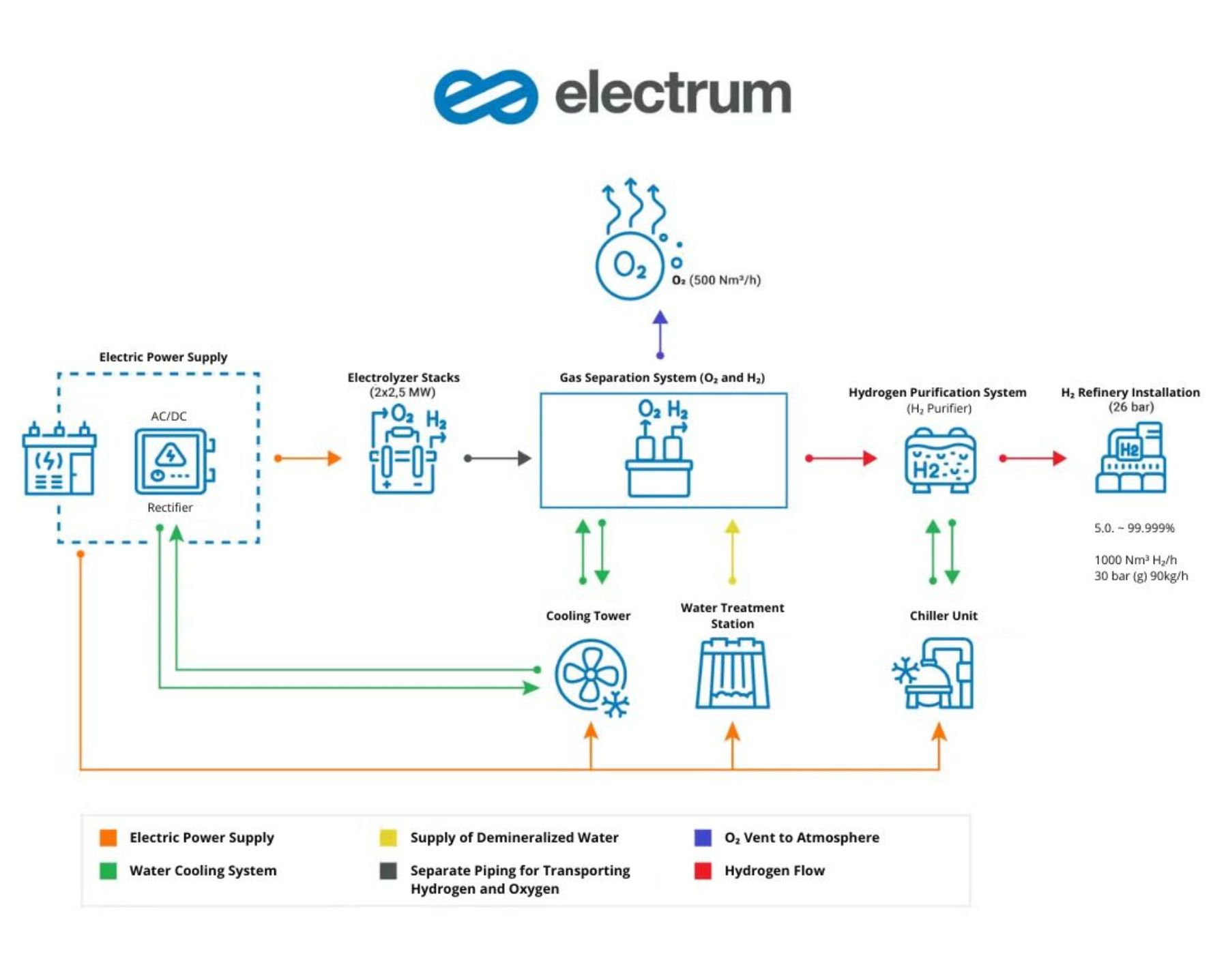
Fig. 3 Electrolyzer at Gdańsk Refinery
Our competencies are confirmed by, among others, the “turnkey” project implemented for Gdańsk Refinery, as part of which we are building one of Poland’s largest alkaline water electrolysis installations with a capacity of 5 MW – complete with accompanying infrastructure, full technological integration, and commissioning.
This is an undertaking of strategic importance for Polish industry, showing that green hydrogen can be both an effective decarbonization tool and an element building cost and operational advantage.
Hydrogen produced in Gdańsk – 85 kg per hour with 99.995% purity, compliant with SAE J2719, PN-EN 17124, and ISO 14687:2019 standards – will supply, among others, the transport sector, opening the way for broader application of zero-emission fuels in the economy.
At Electrum, we bring to such investments not only execution competencies but also the ability to design and integrate infrastructure, which makes energy transformation visions become real projects ready for operation.
Sources
Report “District Heating in Numbers – 2024,” Energy Regulatory Office
Report “Global Hydrogen Review 2024,” International Energy Agency
Report “Making the Breakthrough: Green Hydrogen Policies and Technology Costs,” International Renewable Energy Agency
Report “The Race for Hydrogen,” Polish Economic Institute
Report “Green Hydrogen from RES in Poland,” Polish Wind Energy Association
Green-news.pl – Elbląg with the world’s first hydrogen source at a combined heat and power plant. The electrolyzer is powered by green energy
Pol-Miedź Trans satisfied with hydrogen locomotive tests – Railway Market
What benefits can the combination of agricultural production with photovoltaics bring? In this article, we explain what this solution is all about.
How does it work, and is it successful globally? What potential does it have for energy production? Why is this trend worth our attention?
Agrivoltaics Definition and Quick Facts
Definition: Agrivoltaics is the combination of agricultural activities with solar photovoltaics.
The term comes from “agri-” (related to agriculture) and “photovoltaics.” Other terms used interchangeably include agrophotovoltaic and agriPV.
In Europe, we observe dynamic growth of agrivoltaics in countries like France, Italy, the Netherlands, and Spain.
Agrophotovoltaic systems (agriPV) are also very popular in Asian countries such as China, South Korea, and Japan.
According to the report “Agrophotovoltaics in Poland: Modern Agriculture Powered by Solar Energy” by the Polish Photovoltaic Association, over 14 GWp of agriPV systems have been installed worldwide by 2023.
Polish agrivoltaics are on the cusp of rapid growth, but the current lack of legal regulations supporting this solution is a barrier. However, this situation may change soon. Globally, the integration of solar energy with agricultural activities is continuously developing.
What is Agrivoltaics and How Does It Work in Practice?
Agrophotovoltaic installations (agriPV or APV) have tremendous potential for modern sustainable agriculture. The technology combines the cultivation of crops or livestock with solar energy production on the same land, either for self-use or for sale. Typically, this involves placing PV panels on agricultural land, but the term also applies to installing panels on industrial buildings within farms.
To answer the question “what is it and how does it work,” let’s describe the main current designs of agriPV farms, though specific implementations may vary.
Photovoltaic Panels Above Crops
In the most popular form, PV panels (e.g., semi-transparent but not necessarily) are placed above the ground on specially designed tall structures. The height depends on the type of crop and the specific needs of the farm – it can reach several meters. The panels leave space for crop growth and allow free movement underneath, including the use of agricultural machinery in taller installations. Thus, farmers have no issues accessing their crops. These agricultural solar systems generate energy from the sun while simultaneously protecting crops from excessive sunlight. The food grows in the shade of the panels, benefiting from a unique microclimate, reduced wind exposure, and better soil moisture.
Photovoltaic Installations Between Crop Rows
Another approach involves placing rows of photovoltaic panels between crop rows or in livestock areas (occupying, for example, 30% of the land), making them similar to traditional solar farms. The rows of panels can provide shelter for animals on hot days and also enhance biodiversity by preserving wild meadow vegetation beneath them. They protect the land from excessive soil erosion by reducing wind impact. In a version closest to traditional solar farms, the panels can cover the entire area, with crops like bear’s garlic growing underneath them (as seen in Poland, which we’ll discuss shortly).
Vertical Agrophotovoltaics and Greenhouse Crops
Another practiced solution is vertical agrivoltaics. Vertical panels are mounted on tall structures or supports, allowing for better use of the agricultural space beneath them.
There are also tests of APV installations integrated with greenhouses.
What Are the Benefits of Agrivoltaics?
Droughts, heatwaves, intense storms, and hail – climate change brings extreme weather events. In such a climate, APV installations can become a shield for crops – providing shade that helps lower temperatures on hot days while increasing them on cooler days through combined shading and ventilation. Another advantage of agriPV is the reduction of water evaporation – a properly designed system can support rainwater collection and water management in the face of increasingly frequent heavy rainfall.
Photovoltaic panels also offer protection for delicate crops (like blueberries or raspberries) from heavy rains, hail, and other adverse weather.
Can Photovoltaic Fruit Cultivation Lead to Higher Quality?
Findings from agriPV farms worldwide confirm that by improving growth conditions and creating optimal microclimates, we can influence the quality of fruits and vegetables. For instance, studies on strawberries have shown a significant increase in fructose and glucose concentrations in strawberries grown under photovoltaic panels. Research also observed a general increase in yield and strawberry weight. In France and Italy, investments in photovoltaic fruit cultivation are even focusing on grapes, thus creating “solar vineyards.”
Photovoltaics Used as Intended
In every combination of agricultural production with photovoltaics, PV modules perform their primary function – producing electricity that can be used to power the farm or sold, becoming an additional source of income.
Year by year, photovoltaics are advancing rapidly, with increasing knowledge and technologies enabling the creation of more efficient PV installations. This helps boost the efficiency of electricity production from photovoltaics combined with agriculture. Solutions such as solar trackers, which monitor the sun’s position and adjust solar panels accordingly, contribute to this increased production.
AgriPV installations can be a solution to rising electricity prices and the energy demands of large farms, which often make continuing agricultural production challenging and unprofitable.
Dual Use of Agricultural Land – What Obstacles Must Agrivoltaics Overcome in Poland?
Due to rising energy prices, more and more Polish farmers are interested in renewable energy sources. This interest is also driven by regulations promoting sustainable agrivoltaic farming systems, such as the Strategy for Sustainable Development of Rural Areas, Agriculture, and Fisheries 2030, which is part of the broader global shift towards renewable energy.
Photovoltaics are advancing before our eyes. Under EU legislation, the role and development of solar energy are increasing each year.
The European Green Deal includes plans to coordinate the reform of the Common Agricultural Policy. One of the goals of this reform is to support innovative climate action solutions. Concurrent agricultural and photovoltaic production is undoubtedly such an action, ensuring both food and energy security. The concept has been identified by the Joint Research Centre as a key area for development to achieve the EU’s PV targets.
Agrivoltaics require dual land use, and in Poland, the construction of a traditional solar farm requires administrative reclassification of land for non-agricultural purposes, which involves obtaining a single administrative decision. Agrophotovoltaic systems (agroPV), on the other hand, do not remove land from agricultural production. Does this offer the possibility of more efficient land use? Absolutely.
The development of agrivoltaics can be supported by introducing new definitions (such as agrophotovoltaic farms), promoting the benefits of agrophotovoltaics in Poland, and creating a support system for such investments. This doesn’t mean, however, that the country hasn’t begun experimenting with this solution.
Cultivating Bear’s Garlic with Agrivoltaics – How Does It Work?
In Poland, for example, there is a farm cultivating bear’s garlic using agrophotovoltaics. It operates under the Zgorzelec Cluster for Renewable Energy and Energy Efficiency. In 2021, 10,000 bear’s garlic seedlings were planted between the panels. This plant requires little space to grow and prefers shaded or semi-shaded areas, so there was no concern about whether it would thrive. The first harvests were satisfactory, but the 2024 harvest, after the garlic had matured, was a true success. This plant has gained popularity in recent years, mainly due to the pesto that can be made from it.
Agrivoltaics Tested in Other Countries
Agrivoltaics are developing in countries like Italy and France, which can serve as good examples for us. The aforementioned “solar vineyards” inspire the use of agricultural land tailored to the climatic conditions specific to each country.
Japan, where limited agricultural land availability drives agrophotovoltaic development, is also a model, with agroPV being used on rice crops, for instance. The innovations emerging there aim to maximize land use efficiency.
Agrivoltaics tested in neighboring countries and worldwide have already provided us with a wealth of information about how integration works, why the system functions, and whether it performs well under specific conditions. Therefore, we will have no problem translating this accumulated knowledge into concrete actions.
Italy bans PV from agricultural land
Recently, the Italian government introduced a decree banning the construction of new ground-mounted photovoltaic systems on agricultural land to protect fertile soil from degradation. The goal is to ensure that this land is primarily used for food production rather than energy generation. The exception to the ban is agrivoltaic projects, which allow for simultaneous agricultural production and electricity generation. The decision has been positively received by farmers, but the photovoltaic industry criticizes it, accusing the government of imposing restrictions on the development of renewable energy sources.
Agrivoltaics – The Future of Renewable Energy
Agrivoltaics technology is a technology of the future, and it’s important that farmers and investors in Poland are aware of its potential. Photovoltaic systems in agriculture will become increasingly important, as agrophotovoltaics offer benefits that traditional photovoltaic installations cannot – in addition to energy production, they ensure food security and fulfill agricultural objectives.
We live in a time when the growth of photovoltaics is so visible and significant, and the need to support innovation so well understood, that we won’t have to wait long for solutions that will drive the development of Polish agrophotovoltaics. Even before gaining momentum, at Electrum, we are pleased to use our knowledge and experience to contribute to the development of agrophotovoltaic systems. For us, innovation takes center stage, driving the future of renewable energy.
When it comes to unconventional solar technologies, floating solar farms, also known as floating photovoltaics (floating PV systems or FPV systems) — deserve special attention. These are PV panels placed on floating structures situated on bodies of water.
Although still uncommon in Poland, this technology is gaining recognition across Europe and worldwide. Why is it worth paying attention to this trend? What benefits does floating solar bring? And how exactly does a floating solar farm work compared to traditional land-based farms?
Why Floating Solar?
Many countries face a shortage of space for new land-based PV installations, especially in densely populated areas. On top of this, there is increasing competition for land between agriculture, industry, and property development. Italy, for example, has prohibited further PV installations on agricultural land. New large-scale solar farms on inexpensive but ecologically valuable areas are raising concerns about biodiversity.
In Europe, this issue is particularly significant because many renewable energy installations are located in protected areas. This is why the European Commission is exploring and promoting innovations that minimize harm to ecosystems. In response to these challenges, floating solar farms are gaining momentum, offering renewable energy without the need for additional land. Solar installations on lakes and other bodies of water represent a step toward a sustainable future.
Floating solar panels
Floating solar farms rely on photovoltaic modules installed on special platforms that float on the surface of water bodies, such as lakes, irrigation ponds, reservoirs, or disused areas like decommissioned gravel pits. The goal is to utilize water bodies that aren’t used for tourism, sailing, agriculture, or other purposes.
Floating solar panels operate on the same principle as land-based photovoltaic systems, converting sunlight into electricity — direct current (DC) is transformed into alternating current (AC) through inverters. So, is this different from conventional PV installations? Not in the mechanism of energy production.
The floating platforms, made from buoyant materials, provide stability for the panels on water, while specialized anchoring systems keep them in place, preventing movement due to wind or water currents. The structure maintains flexibility, allowing the panels to adapt to water movements.
Using the water’s surface enables natural cooling of the panels, resulting in higher efficiency compared to ground-mounted installations.
The history of floating solar panels dates back to 2007, when the first floating installation with a capacity of 20 kW was launched in Japan. This project laid the groundwork for the development of this technology in other countries, such as South Korea, China, and the United States. The growth of floating farms accelerated as it became clear that they could address land scarcity issues and improve energy production efficiency. Through collaboration among governments, industry, and research institutions, FPV system designs and efficiencies were refined.
Today, floating solar projects are emerging worldwide. In Europe, a floating solar farm with a capacity of 74.3 MW has been announced, to be built on an artificial reservoir at a former gravel pit in northeastern France.
In Poland, this technology is in the early stages of development. The first floating farm began operation in 2022 in Gdańsk, consisting of 110 panels with a capacity of 49.5 kWp installed on an artificial stormwater retention reservoir.
Advantages of Floating Solar Installations
In addition to generating clean energy and contributing to our energy system, helping advance renewable energy sources (RES) and the green revolution, floating solar farms offer several key benefits. To start, with the ability to save land and increase efficiency, floating solar are becoming increasingly popular in densely populated countries.
1. Optimal Use of Space
A floating solar power plant enhances our ability to utilize available space, especially in areas where land is scarce, too expensive, or highly productive (high-quality soils ensuring abundant yields). This is well illustrated by examples from Asian countries like Japan and South Korea. Floating photovoltaic technology also addresses land-use conflicts with the agricultural sector, which increasingly views large ground-mounted solar farms as a threat to diminishing farmland resources.
2. Better Lifespan and Efficiency of Panels
Floating solar panels achieve higher efficiency than ground-mounted systems, as water acts as a natural cooling system, preventing overheating. Utilizing water surfaces can increase the energy efficiency of the panels by up to 15%. Additionally, water reflects sunlight, which in normal conditions might be scattered or absorbed by the ground. The reflected light hits the panels again, boosting the amount of energy the panels can generate.
3. Easier Maintenance of Installations
Floating installations on water require less frequent cleaning. The air above water bodies contains fewer dust particles and pollutants compared to land areas, with water acting as a natural filter. In land-based systems, dirt reduces panel efficiency, necessitating regular cleaning. Additionally, vegetation often grows around ground-mounted installations, requiring frequent mowing – this is not an issue for floating installations.
Can floating solar panels have a positive impact on water environment management? The partial shading of a water body by the panels limits algae growth, which can negatively affect water quality, especially in warmer climates. The reduction of sunlight reaching the water lowers its temperature, which can improve conditions for certain aquatic species. Additionally, floating solar farms can act as a wind barrier, reducing surface water wave action and helping protect the reservoir’s banks from erosion.
In the case of larger FPV projects, floating solar panels can help conserve water by preventing evaporation, which is particularly important in light of growing drought issues in many regions of the world.
Floating solar may also provide a solution for businesses that only have access to “water-based” areas, such as water reservoirs and basins at wastewater treatment plants, which store water for domestic and commercial use.
Floating PV projects require careful planning and analysis to maximize the use of floating technology and avoid issues related to water quality and the environment. Key steps include selecting an appropriate location that takes into account hydrological conditions and climate, as well as designing a structure that will perform well in aquatic conditions.
At Electrum, we design and build solar farms.
How does the design of floating PV installations look in Poland at the moment?
An important aspect here is the uncertainty regarding administrative decisions, such as the requirements under the Environmental Conditions Decision. Potential restrictions related to the impact of the installation on aquatic ecosystems must be considered, along with an analysis of how FPV projects will be classified under Polish regulations in terms of obtaining a Building Permit. Another key factor will be the possibility of securing the implementation of FPV in Local Spatial Development Plans and Protection Plans. Regarding the use of water for energy purposes, obtaining a water law permit will be necessary.
An important part of the project is also integration with the local energy grid and minimizing the impact of the installation on the ecosystem, for example, by monitoring the oxygen levels in the water and the quality of the aquatic environment.
In Electrum, we assist in defining an individual path to renewable energy sources, offering comprehensive support in designing and implementing photovoltaic technologies, including modern FPV systems.
Floating solar panels location
Placing floating solar panels on water primarily requires the selection of an appropriate water body – artificial lakes, reservoirs, or areas used for industrial purposes, such as wastewater treatment plants, are preferred. It is important that the water body has a stable water level and is not exposed to extreme weather conditions, such as strong currents or waves, which could damage the panels or reduce their efficiency.
In Poland, a significant factor affecting floating solar farms will be the changing seasons, especially winter and freezing temperatures, which may negatively impact the durability of the installation. To address this, durable materials resistant to low temperatures are used, along with flexible anchoring systems that allow the structures to adapt to ice movements. Some installations may also use heating systems to prevent the water around the panels from freezing. Alternatively, placing farms in deeper water bodies or limiting their operation to warmer months can reduce the risk of damage.
Floating solar farms and Costs
Floating solar panels are, of course, not without their challenges. A floating installation can cost 25% more than land-based systems. The panels carry the risk of lowering oxygen levels in the water, which can harm fish, and if the technology is not properly designed, the panels themselves can negatively impact water quality.
Although floating solar farms are more expensive than land-based systems, increasing financial support from the European Union for innovative energy technologies may help offset these cost differences. Poland has access to funds allocated for the development of renewable energy sources, which can support pilot floating photovoltaic (FPV) projects. Offered loans and grants can provide significant support to companies planning investments in floating PV farms. In Poland, the use of floating photovoltaic systems can contribute to sustainable energy development by reducing pressure on agricultural land and protected natural areas.
In summary, a floating photovoltaic power plant, known as a floating PV system, is an innovative solution that allows for the production of clean energy without occupying valuable land.
These installations are placed on water bodies (solar panels are mounted on floating platforms), which not only saves space but also increases the efficiency of the panels by naturally cooling them with water.
Floating solar power plants are an ideal solution for areas with limited land space, and they also help reduce water evaporation.
We hope that the development of floating power plants in Poland is just a matter of time – floating farm projects are still in the conceptual phase, but initial analyses regarding their implementation are already emerging. Unfortunately, as with other renewable technologies such as offshore wind, green hydrogen, or energy storage, the implementation of FPV technology in Poland faces legislative hurdles. While the technology and potential are present, there is a lack of appropriate regulations that could speed up the adoption of this solution.
Polish companies are not yet widely engaged in the development of this technology. Electrum has considered the potential of floating PV, but, similar to agrivoltaics, legal barriers and the lack of legislative incentives hinder progress in this field.
A positive aspect is that the documented, long-term experience of other countries in this area will be helpful when we decide to introduce this technology on a larger scale. We have the opportunity to adapt the best practices and technologies to local conditions.
Floating PV – Summary
Finally, it is worth emphasizing that 70% of the Earth’s surface is covered by water. In the future, the use of floating photovoltaics may be expanded to ocean platforms, which would open new opportunities for harnessing energy from renewable sources. Ongoing research into structures capable of withstanding harsh marine conditions will create new possibilities for utilizing water surfaces.
In today’s article, we will analyze what type of land is suitable for an energy storage facility. This topic might be new to you, as discussions about leasing land for solar or wind farms are far more common. However, due to the rapid development of storage systems and the growing market needs, leasing land for this type of investment can prove to be very beneficial.
Read the article and find out if your land can be used to build an energy storage facility.
What conditions must the land meet to be leased for electric energy storage facilities?
Land suitable for an energy storage facility must meet several key requirements. We will now discuss each of them in turn.
Access to the power grid
The key difference between leasing land for electric energy storage facilities and a solar installation is that a BESS project (Battery Energy Storage System) should be located closer to a transformer station or transmission line. However, it is worth noting that this is not always necessary.
It is therefore important to check whether the local grid has sufficient capacity to handle the energy released by battery storage systems and that the cost of connecting to the grid is not too high.
Topography of the land for energy storage
Similar to a solar farm, the land intended for a BESS energy storage project should be relatively flat, not located in wetland areas, and have access from access roads during both construction and maintenance.
Land area for energy storage
Land for an energy storage facility can usually be smaller than that for building a solar or wind farm. This can be a good opportunity for owners of smaller agricultural plots.
We have over 20 years of experience in the energy industry and know how to fully utilize the potential of your plot.
Geotechnical stability of the land for energy storage
The land for an energy storage facility should be geotechnically stable to safely store energy batteries and other storage components. Stable land minimizes the risk of infrastructure damage related to ground movements.
Distance from the road and buildings
Access to the road is crucial both during the initial installation of the project and at later stages for maintenance purposes. Locations should not be at risk of flooding. Maintaining a sufficient distance from buildings ensures adequate fire protection.
Environmental safety
It may be necessary to implement appropriate environmental protections to safeguard nearby ecosystems from the negative impacts of energy storage exploitation. This can be achieved, for example, through proper waste management or groundwater protection.
Compliance with applicable regulations
All activities related to the construction and operation of an energy storage facility must comply with local building regulations, environmental protection regulations, and occupational safety regulations.
How can BESS projects be more attractive to property owners than solar farms?
One advantage of an energy storage project on your property compared to a solar farm is that it requires less space. The exact number of modules that can be installed on one property depends on technical and economic factors.
We design solar farms, wind farms, energy storage facilities, and hybrid installations.
How do I find out if my property qualifies for a BESS project?
Leasing land for energy storage involves a series of analyses to maximize the potential of your land.
What determines the amount of rental income?
The amount of rent depends on the number of units that can fit on a given plot and the cost of connecting to the grid. If costs are low, this can positively affect the amount of rent you receive.
We can conduct a review of your plot to analyze its potential.
Is it worth it? Absolutely!
We sign a lease agreement with the landowner usually for a long period. Owners receive payment (rental income – paid upfront with annual indexation), and the responsibilities related to the operation and maintenance of the storage facility rest on us (limiting the owner’s involvement to the necessary minimum). This way, you can earn income with virtually no involvement in the project.
Now you know what type of land is suitable for an energy storage facility and what is important for the investment to be successful.
A comprehensive solar power system design process encompasses all stages necessary for the design, construction, commissioning, and maintenance of a photovoltaic farm. The project takes into account all technical, legal, financial, and environmental aspects related to the investment. Below, we present the main elements of the process that constitute a solar power plant design.
The designer considers all factors influencing the final shape of the investment, including:
Sunlight levels,
Terrain features,
Land use structure,
Availability of infrastructure, e.g., access roads,
Presence of conflicting objects limiting the feasibility of the PV farm, such as technical infrastructure corridors, wooded areas, ponds,
Location relative to the distribution system operator (DSO)/transmission system operator (TSO) infrastructure,
Location relative to legal forms and nature protection forms,
Legal aspects, e.g., related to ownership or spatial planning.
2. Local vision
This stage evaluates whether the chosen land is suitable for installing photovoltaic panels. It includes activities such as:
Verification of the actual terrain and land use, including the presence of conflicting objects,
Property inventory,
Inventory of potential connection line routes,
Site inspection of potential connection points,
Verification of access possibilities to the property.
3. Concept Design of Solar Power Plant
The concept design of the solar power plant is a preliminary plan that includes basic technical and organizational assumptions. It largely results from the work described in points 1 and 2. It includes:
Placement of photovoltaic panels and inverters,
Placement of transformer stations,
Diagram of low voltage (LV) and medium voltage (MV) cable lines,
Layout of internal roads,
Mapping potential routes for connection lines.
The concept design forms the basis for further, more detailed studies. It provides information on forecasted annual yields and investor costs.
How to Fully Utilize Your Land’s Potential?
At Electrum, we propose optimal solutions aimed at maximizing the potential of your plot. Collaboration with an experienced and trusted partner is crucial for increasing profits from a solar farm.
4. Lease/Ownership
Implementing a photovoltaic project requires settling legal matters regarding land ownership or lease. Both leasing land for a photovoltaic farm and purchasing it have their advantages, with the choice depending on the investment strategy and local conditions. Leasing agreements are generally the more popular form of obtaining land use rights.
5. Environmental Decision
An environmental decision is required if the area defined by the outer contour of the photovoltaic panels exceeds 0.5 hectares in protected areas or 2 hectares in other areas. This decision specifies the method of implementing the PV farm to minimize its environmental impact. Therefore, the ED imposes additional restrictions to minimize or compensate for the negative impact of the PV farm on the environment.
Depending on factors such as the scale of the photovoltaic farm and its location, it may be necessary to prepare an environmental impact report (EIR) based on year-round environmental inventory. The EIR is an element that significantly prolongs the process of obtaining the ED, which is often more stringent.
This decision results from an environmental impact assessment (EIA) that analyzes the potential impact of the investment on local fauna, flora, and other environmental aspects.
6. Building Conditions Decision and/or Local Spatial Development Plan
Verification of the local spatial development plan (LSDP) is necessary to ensure that the planned investment complies with local regulations and policies. In the absence of an LSDP, obtaining a building conditions decision (BCD) is required, determining the feasibility of implementing the photovoltaic project on the given land. However, it should be noted that BCDs will only be issued until December 31, 2025. From January 1, 2026, photovoltaic farms will be located solely based on the LSDP.
7. Connection Conditions for the Solar power plant
Connection conditions are a document issued by the Distribution System Operator (DSO) or Transmission System Operator (TSO). It specifies the technical requirements (connection point and voltage, and the scope of tasks to be performed by both the connecting entity and the Operator) related to connecting the photovoltaic farm to the National Power System (NPS).
Unfortunately, the number of rejected applications increases year by year. The most common reasons are technical premises, followed by economic premises and economic-technical premises. Therefore, knowledge on how to effectively obtain connection conditions is crucial.
8. Solar energy construction projects
The construction project of the solar power plant is detailed technical documentation necessary to obtain a building permit (BP). It is a set of documents and plans presenting the construction investment in the form and scope specified in the relevant Regulation of the Minister of Development (Journal of Laws 2020, item 1609). For the realization of photovoltaic farms, it includes, among other things, all necessary information regarding the site development plan, photovoltaic farm construction, and electrical installations.
Under current law, the construction project consists of three technical studies:
Land development project (plot),
Architectural and construction project,
Technical project.
Main Elements of the Solar Power System Design
Land Development Plan: Layout of photovoltaic panels, cables, support structures, and other infrastructure elements on the solar farm site.
Project Descriptions: Including information on technical parameters, standards, norms, and installation requirements.
Construction Solutions: Covering the type of components, dimensions, or wind and snow loads.
Electrical Solutions: Design of the photovoltaic farm’s electrical installation, covering the layout of cables, protections, measuring points, as well as the connection method to the power grid and electrical diagrams of the photovoltaic panels, inverters, transformers, monitoring, and control systems.
Geodetic Documentation: Including a map for design purposes, maps, plans, and geodetic profiles of the land necessary for the correct placement of photovoltaic panels and technical infrastructure.
Technical Specifications: For used components, including photovoltaic panels, inverters, support structures, cables, protections, and equipment.
Map for Design Purposes
A map for design purposes is a detailed cartographic study showing the terrain features, location of existing objects, and technical infrastructure. It is essential for preparing an accurate construction project for the photovoltaic farm.
Solar Power System Design and Development
After obtaining all necessary permits, the investment implementation can begin. This stage includes the solar farm construction, installation of panels, inverters, cabling, and connection to the power grid. Upon completion of construction works, tests and technical acceptances are carried out to ensure the installation operates correctly and according to the project assumptions.
Good land for building a PV farm should be conveniently located from a logistical perspective, ensuring excellent sunlight exposure for the panels.
We prepare construction-execution projects and MV connection projects necessary to obtain a building permit for the photovoltaic farm. We complete the required documents and submit a building permit application.
Maintenance and Monitoring of the Solar Farm
After commissioning the photovoltaic farm, regular monitoring and maintenance are necessary. This includes technical inspections, panel cleaning, repairs, and updates. Effective management of the photovoltaic farm ensures its long-term efficiency and optimized profitability.
Solar Power System Design Summary
Each stage presented in this article is crucial to ensure the efficiency, regulatory compliance, and profitability of a photovoltaic farm. At Electrum, we execute projects comprehensively – providing development, EPC, and O&M services for the most technologically advanced projects.

 Download the press note