
What should you know about leasing land for a photovoltaic installation?
Do you own land and are wondering whether leasing it for a photovoltaic installation or energy storage facility is a good idea? Or perhaps you are looking to lease land from someone in order to invest in a photovoltaic installation?
In this guide, we will cover all the key aspects from both perspectives – that of the landowner and that of the investor seeking a suitable plot.
For landowners
How much can you earn from leasing land for photovoltaics?
A photovoltaic plot can generate varying returns depending on factors such as:
- the location, size, and renewable energy potential of the property (find out more: How to Choose the Best Location for a Photovoltaic Farm?),
- the projected generation profile,
- the potential for further scaling of the project,
- the property’s proximity to technical infrastructure,
- the applicable legal regulations governing renewable energy in the given area.
Earnings per hectare designated for farm construction are therefore highly dependent on individual circumstances and are subject to negotiation.
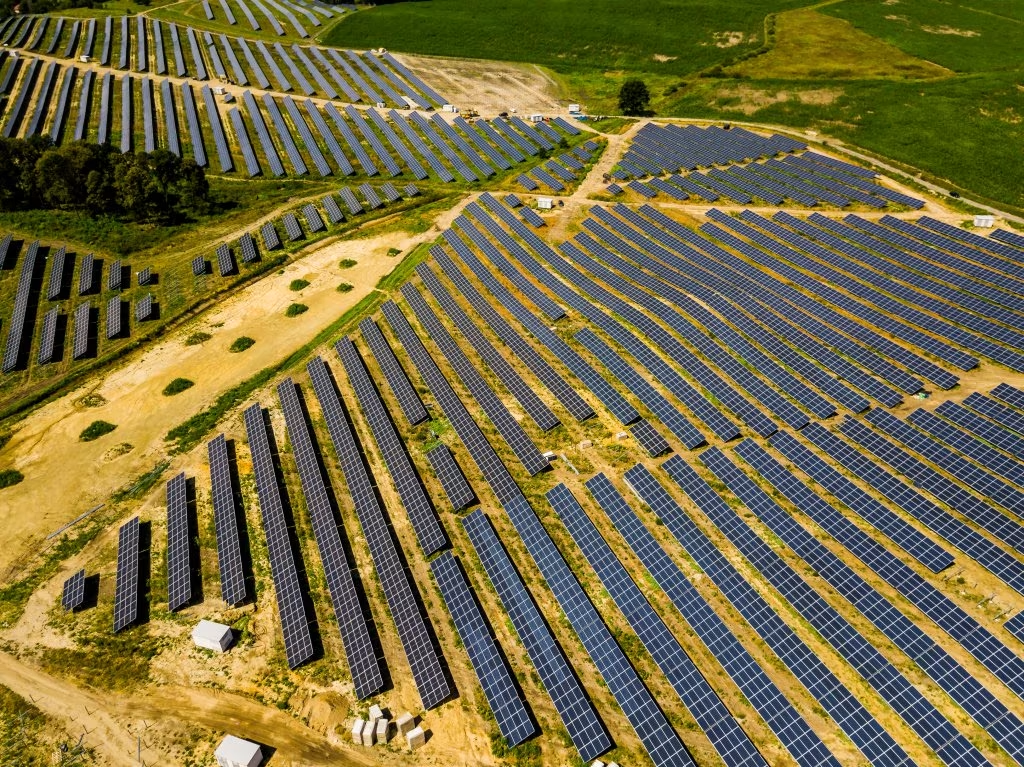
How to assess your land’s potential for a PV farm?
A photovoltaic investment must be preceded by a series of analyses. Independent assessment requires considerable time and extensive knowledge, which is why we encourage you to get in touch.
The assessment covers, among other things:
- terrain topography,
- land use classification structure,
- infrastructure accessibility, e.g. access roads,
- the presence of conflicting features that may limit the feasibility of a PV farm, such as utility easement corridors, wooded areas, and small water bodies,
- proximity to DSO / TSO infrastructure,
- proximity to legally protected natural areas,
- legal aspects, e.g. relating to ownership or local spatial development plans,
- solar irradiation levels.
Key elements of a land lease agreement for photovoltaics
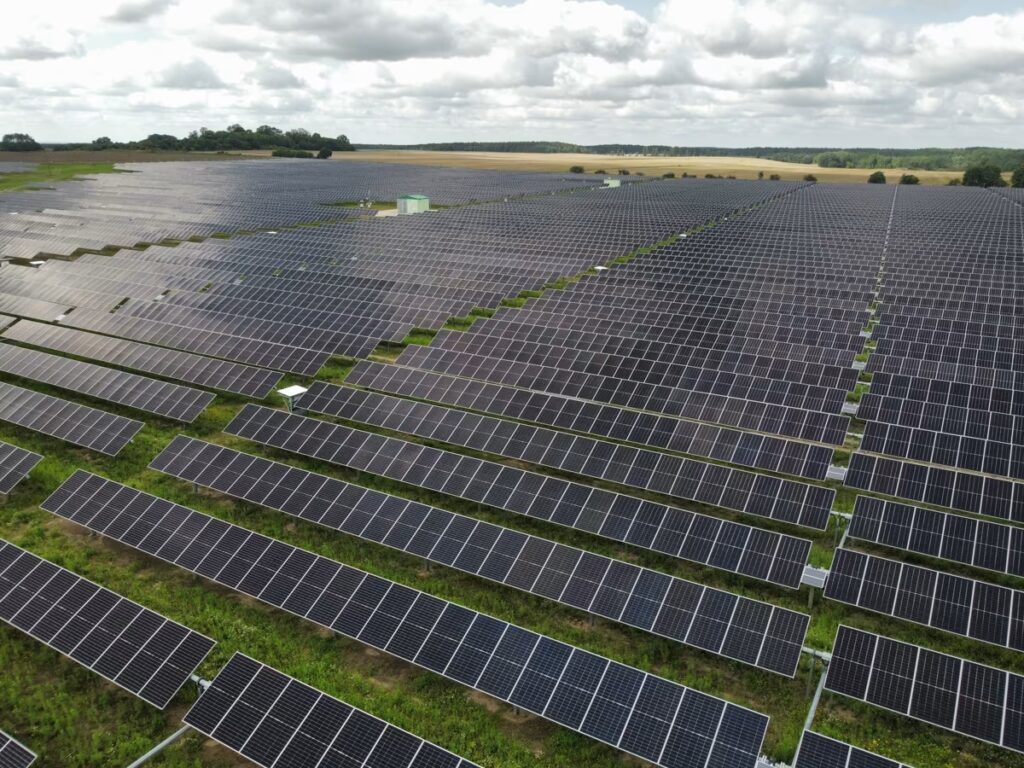
A land lease agreement for a photovoltaic installation covers a number of important points that should be precisely regulated to ensure clarity and security for both parties. The most important of these are as follows:
Definition of the subject of the agreement: This involves the precise identification of the cadastral numbers and land and mortgage register numbers of the properties or parts thereof to be leased for the photovoltaic installation. The area must be defined accurately, to the nearest 1 m². In addition, the subject of the lease is also presented in a graphic annex showing its boundaries overlaid on a base map, cadastral map, or orthophotomap.
Duration of the agreement: The agreement specifies the period for which the land lease is concluded. In the case of photovoltaic installations, agreements are long-term. A fixed-term lease may be concluded for a period not exceeding 30 years.
Rent amount and method of determination: The rent is determined by the rate agreed upon through negotiation, expressed in PLN/ha/year, and the leased area expressed in hectares.
Payment models and financial structures: One of the key elements when leasing land for a photovoltaic farm is establishing the payment model. The following should be defined in the lease agreement:
- rent payment periods (annual, semi-annual, quarterly) and whether payments are made in arrears or in advance,
- rules for annual rent indexation,
- additional payments,
- formal and accounting matters.
Initial rent and standstill rent: The initial rent in land lease agreements is a payment made by the lessee (e.g. an energy company) to the landowner during the period from the date of signing the agreement to the commencement of construction.
The standstill rent is a regular payment made by the lessee to the landowner from the commencement of construction throughout the entire construction period.
Rights and obligations of the parties: The specification of rights and obligations applies to both the lessee and the lessor. The most important matters include:
- the scope of the investment that may be carried out on the leased property,
- the scope of actions the lessee may and may not undertake under the agreement,
- the scope of actions the lessor may not undertake, as these could negatively affect the investment (primarily its productivity),
- the definition of circumstances that would entitle either party to terminate the agreement.
Legal provisions governing land lease for photovoltaic installations
Polish legislation includes a number of acts that significantly restrict the use of real property. Among these are provisions relating to:
- Land classification – the most suitable are class V, VI, and IV land. Class I–III land is protected, as is class Ls (forest) land.
- Land origin – mineral-origin land is preferable. Land of organic origin is protected.
- Inalienability and non-transferability of property within 5 years of its acquisition.
Additionally, local planning instruments must be taken into account – in particular local spatial development plans, which frequently contain provisions that entirely prohibit development or restrict it to a specific type and function. Significant entries may also appear in land and mortgage registers, where properties or parts thereof subject to transmission and passage easements, or encumbered by a substantial mortgage, are excluded from development.
Land leased for a photovoltaic installation and lease taxation
Whether personal income tax applies to income from leasing agricultural land depends on the purpose for which the land is leased. If the purpose is agricultural, the lease income is not subject to income tax. If, however, the purpose is non-agricultural (e.g. leasing land for solar panel installations), the farmer is liable to pay income tax.
Personal Income Tax (PIT): Until the end of 2022, land lease income was taxed under general rules based on the tax scale defined by the PIT Act. From 2023 onwards, land lease income is taxed in the same manner as private rental income – i.e. as a lump-sum tax on recorded revenue.
In 2024, the lump-sum tax rate on lease income is 8.5% up to PLN 100,000; on the amount exceeding this threshold, the lump-sum tax rate is 12.5% of revenue.
Corporate Income Tax (CIT): Legal entities – such as limited liability companies and other legal forms – receiving income from leasing land for a photovoltaic farm are subject to corporate income tax (CIT).
The standard CIT rate is currently 19% of pre-tax income. Companies classified as small taxpayers and newly established businesses may benefit from a reduced rate of 9%.
Non-agricultural lease and real property tax: Leasing agricultural land for non-agricultural purposes means it ceases to be subject to agricultural tax and instead becomes subject to the significantly higher real property tax, to the extent that the land is used for business activity purposes.
Land Lease for Energy Storage – What You Should Know
Land can be leased not only for a photovoltaic installation, but also for an energy storage facility, which constitutes an important element of energy infrastructure. It enables the storage of surplus electricity and its release to the grid when demand increases or generation is limited. The most common type of lease in this context involves battery energy storage systems (BESS), which operate in conjunction with photovoltaic farms.
See also: What Are the Methods of Energy Storage in the Renewables Sector? – Electrum

How to assess your land’s potential for energy storage?
As with PV installations, the most desirable locations are those that:
- are situated close to energy infrastructure,
- have a clearly regulated legal status,
- have appropriate designation in the local spatial development plan,
- provide suitable technical access.
The differences relate to the required area – energy storage facilities are considerably more compact than photovoltaic farms, often occupying anywhere from a few hundred square meters to several hectares. Furthermore, they can be developed on sites less attractive for PV panels, such as locations with lower solar irradiation levels. Proximity to power grid infrastructure is the key factor.
Read more: What Land Is Suitable for Energy Storage? | Electrum
What elements should be included in a land lease agreement for energy storage?
The structure of the agreement is largely the same as for a photovoltaic farm, as described above. Some elements may, however, require a different approach depending on the individual circumstances and arrangements with the investor.
As noted, a smaller area is required for the construction of an energy storage facility; however, important considerations include access road availability, safety and fire protection zones, and ancillary infrastructure – all of which are frequently addressed in the agreement. Documentation may also include provisions relating to future modifications to the installation, such as battery replacement or capacity expansion.
For individuals or companies seeking to lease land from a landowner
How to find suitable land for a photovoltaic installation?
Land that matches the nature of the investment is key to success. Finding a plot for a photovoltaic farm requires taking several steps that can have a decisive impact on the success of the entire venture. These steps are described in the section above: How to assess your land’s potential for a PV farm?
For more detailed information on finding the ideal plot, see the guide: How to Choose the Best Location for a Photovoltaic Farm?
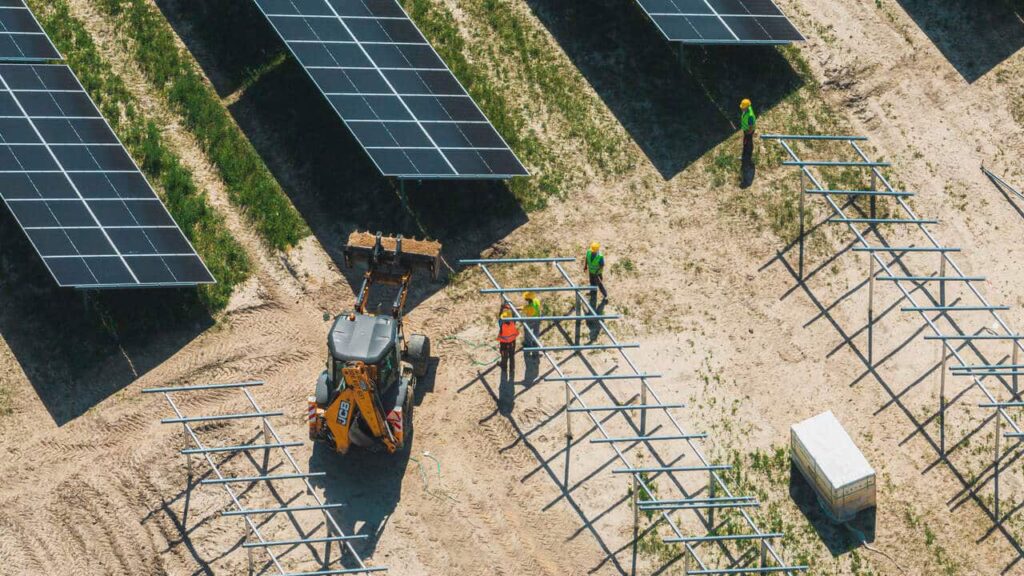
Land lease for photovoltaics and energy storage – environmental benefits and sustainable development
Leasing land for a PV installation, in addition to its financial benefits, brings a range of positive changes in the direction of sustainable development:
- Clean energy generation – photovoltaic installations enable the production of electricity from renewable energy sources, contributing to the reduction of greenhouse gas emissions and other air pollutants.
- Sustainable development – investment in photovoltaics supports sustainable development goals by reducing dependence on conventional energy sources such as coal and minimizing the negative impact on the natural environment.
- Job creation – the construction and operation of photovoltaic installations generates new employment in the renewable energy sector, supporting local economies.
- Improved energy security – renewable sources such as solar energy reduce dependence on energy imports and lower the risk of supply disruptions.
- Long-term energy stability – photovoltaics offer long-term energy stability thanks to low operating costs and predictable electricity production costs.
- Protection of natural resources – investment in photovoltaics contributes to the protection of natural resources such as water and soil by limiting the exploitation of non-renewable raw materials.
- Additional revenue for local government budgets – the investment generates additional revenue from real property tax and, in part, from CIT.
Land lease for photovoltaics and energy storage – summary
Leasing agricultural land for photovoltaic farms or energy storage facilities can generate stable income. Before making a leasing decision, a thorough assessment of the site’s potential in terms of solar irradiation, topography, and infrastructure availability is essential. A clearly drafted land lease agreement is key to protecting the interests of both parties. The agreement should include provisions covering the rent amount, the duration of the agreement, the obligations of each party, and all rules governing the use of the site.


