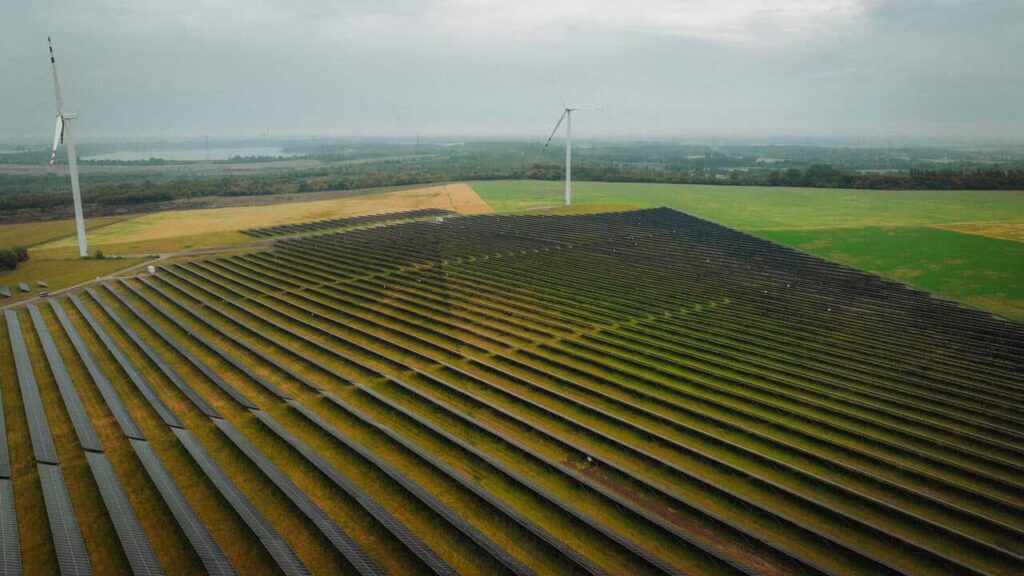
Wind energy is an important component of the energy transition. Investment in its development represents a clear opportunity – not only for the wider adoption of renewable energy technologies, but also for individuals who can build careers in forward-looking and rewarding professional fields.
It is a combination of benefits that spans both environmental protection and the creation of new jobs, including in smaller communities.
At Electrum, we handle large-scale wind projects on a comprehensive basis. As we are responsible for both the construction and the ongoing maintenance – management, monitoring, and servicing – of wind farms, we employ specialists from a wide range of disciplines. We operate on an EPC+ model, meaning we take full responsibility for our investments. In today’s article, we look at the various career paths currently available thanks to the growth of wind energy, presenting an overview of professions associated with the construction, servicing, maintenance, and operation of wind farms.
See also: Working in Photovoltaics – What Are the Popular Career Paths? – Electrum
What are the main areas of employment in wind energy?
The dynamic growth of wind energy investment – both onshore and offshore – has generated strong demand for specialists across a wide range of disciplines. Employment opportunities extend beyond technical roles to encompass engineering, logistics, project management, environmental protection, and administration. It is a sector that combines advanced technology with a tangible impact on sustainable development, making it a particularly compelling choice for those who wish to contribute to the shared responsibility of caring for the natural environment.
Onshore and offshore wind energy: differences and opportunities
Onshore and offshore wind farms differ in terms of investment scale, the complexity of the work involved, and its nature – which translates into different demand for particular specialists.
Onshore wind energy is undoubtedly the more widespread and mature part of the renewables market. Onshore projects are currently being delivered across many parts of Poland, which means strong accessibility for prospective candidates. Work in this area offers the convenience of a local character while providing continuous opportunities for professional growth and the development of technical competencies.
Offshore wind energy, by contrast, is a field currently experiencing dynamic growth. It is a highly technology-intensive segment of the renewables sector, characterized by enormous project scale, high capital investment, and complex logistics – making a highly specialized workforce essential. In addition to service technicians, structural engineers, and offshore engineers, these projects require the involvement of specialists in marine logistics and transport, as well as health, safety, and maritime security experts.
While working in offshore wind energy may come with higher expectations – not least in terms of availability – it offers attractive financial conditions, involvement in international projects, and accelerated career development.
A wind farm as a workplace: structure and operation
As already noted, the efficient operation of a wind farm requires an entire system in which teams with diverse competencies work together. As a company that delivers these projects on a comprehensive basis, Electrum employs experts across several key areas:
The technical area covers the construction, operation, and servicing of wind turbines, generating demand for technicians, electricians, automation specialists, and engineers. Management and administration is a segment dedicated to construction managers, project managers, and operations specialists – this area is responsible for planning and coordinating work, overseeing documentation, and production reporting. Health, safety, and environmental protection encompass specialists ensuring compliance with occupational health and safety standards and sustainability requirements.
It is worth noting employment forecasts for this sector. According to the Global Wind Organization (GWO) and Global Wind Energy Council (GWEC) report Global Wind Workforce Outlook 2023–2027, by 2027 the industry will require more than 574,000 new wind farm technicians. The number of employees working in Operations & Maintenance (O&M) – responsible for overseeing the ongoing performance of RES facilities – is set to grow by as much as 29%. We regularly recruit specialists in this area at Electrum. As a leader in professional operations & maintenance of energy facilities in Poland, we manage a portfolio of RES sources with a combined capacity of over 3 GW.

Source: GWO, GWEC – Global Wind Workforce Outlook 2023–2027
Professions in wind energy: who can work in the sector?
Delivering the wide range of activities involved in the design, construction, monitoring, and servicing of wind farms requires diverse competencies, which translates into numerous opportunities to find employment and develop further within the renewables sector. At Electrum, we employ specialists including:
- Wind turbine technicians, responsible for, among other things, inspections, maintenance, and repairs;
- Automation specialists, working with turbine control and monitoring systems;
- Project managers, whose role is to plan and coordinate the project delivery process;
- Technical inspectors, overseeing health and safety compliance as well as adherence to regulations such as those relating to environmental protection.
Working at Electrum also means the opportunity to develop expertise in modern technologies – our round-the-clock dispatch center, innovative management systems, thermal imaging, and diagnostic measurement vehicle are just some of the solutions we use in our daily operations.
What are working conditions like in wind energy?
Working conditions in wind energy vary depending on the role. The daily routine of a wind turbine technician differs considerably from that of, say, a dispatcher. Working on turbines requires not only extensive technical knowledge, but also good physical fitness, the absence of a fear of heights, and no medical contraindications. Monitoring wind farms, on the other hand, demands an excellent command of SCADA systems, attentiveness and precision, and the ability to make quick decisions. In both cases, however, clearly defined procedures, rigorous health and safety standards, and a strong emphasis on technical competency and accountability apply.
Rotational and stationary working patterns: what you should know
In technical industries such as renewables, rotational working is becoming increasingly popular. This form of organization involves working in set cycles – for example, two weeks on and two weeks off. The schedule varies depending on company policy and the specific nature of the project. While such a system can be physically demanding, it comes with higher remuneration and a greater number of days off over the course of the year. For many employees, the ability to combine work with extended periods of personal time is also a significant advantage. This applies primarily to technical staff, and largely to offshore wind farms.
In areas such as administration, safety, and management, the conventional stationary model continues to be used – based on a fixed position, location, and working hours. This arrangement offers stability and a healthy work-life balance.
Working at height and fall arrest systems: safety in practice
At Electrum, the safety of our employees is an absolute priority – a particularly important consideration in wind farm operations, where working at height is unavoidable. What does this look like in practice?
To work on wind turbines, appropriate medical examinations must be completed. Medical contraindications include, among others, vestibular disorders, cardiovascular conditions, musculoskeletal problems, and various neurological conditions. A GWO Basic Safety Training certificate is required, confirming adequate preparation for safe working at height, first aid, and fire protection; this certificate must be renewed every two years. Work at height is carried out using full protective equipment – including a harness, helmet, non-slip footwear, and a certified fall arrest system. The recommended harness configuration, as set out by the Central Institute for Labour Protection – National Research Institute, is illustrated below. Every ascent of a turbine is preceded by a thorough review of forecast weather conditions.

Source: Central Institute for Labour Protection – National Research Institute
Technologies supporting work on wind farms
Modern technologies play an important role in ensuring the smooth and efficient operation of wind farms. At Electrum, we are fully aware of this, which is why we use advanced digital tools and equipment that effectively support turbine diagnostics and servicing.
Among the most important solutions are SCADA systems, which enable us to monitor the performance of RES facilities in real time and respond promptly to any alarms. We also use an acoustic camera to locate potential leaks or other structural issues, as well as drones equipped with thermal imaging cameras to detect, for example, overheating in individual components. Electrum also operates a modern diagnostic measurement vehicle, combining mobility with the capability for precise fault localisation.
Education and certification in the sector
Working on wind farms requires the appropriate technical knowledge, which is why a relevant educational background – most commonly in electrical engineering, mechanical engineering, automation, mechatronics, or energy engineering – forms the basis for employment across many areas of the renewables sector. At the same time, employer requirements vary depending on the nature of the role, the level of responsibility, and the specific project (onshore or offshore).
For operational positions such as wind turbine technician, Polish Association of Electrical Engineers (SEP) authorisation – enabling the supervision and operation of electrical equipment – plays an important role. As noted, GWO Basic Safety Training, the international safety standard, is also among the essential certifications.
Those interested in specializing in monitoring systems and remote farm management can develop their expertise in SCADA systems, operational data analysis, and industrial automation. Participation in technical training programs increases competitiveness in the job market.
Read also: Careers in Energy Engineering – What Are Your Professional Options? | Electrum
Industry development prospects
Wind energy is currently one of the most important pillars of the energy transition in Poland and globally. A promising trend is the development of offshore wind farms, which – thanks to more consistent wind conditions and the possibility of building turbines with significantly higher output – offer substantial generation potential. In parallel, onshore farms are being modernized to deliver ever-greater efficiency. Growing investment in this sector translates into new employment opportunities for those looking to work in renewables.
In the coming years, roles associated with the digitalization and automation of operational processes will grow in importance. Increased demand for specialists in the integration of wind energy with storage systems, as well as in hydrogen technologies, can also be expected.
Working in wind energy – Electrum
If you are looking for an employer offering broad development opportunities in wind energy and innovative technologies, we invite you to explore Electrum’s current vacancies. By joining us, you not only take part in the delivery of large-scale RES projects – you also become part of a real and meaningful contribution to building a sustainable future.
Current vacancies can be found at: Find a Job – Electrum